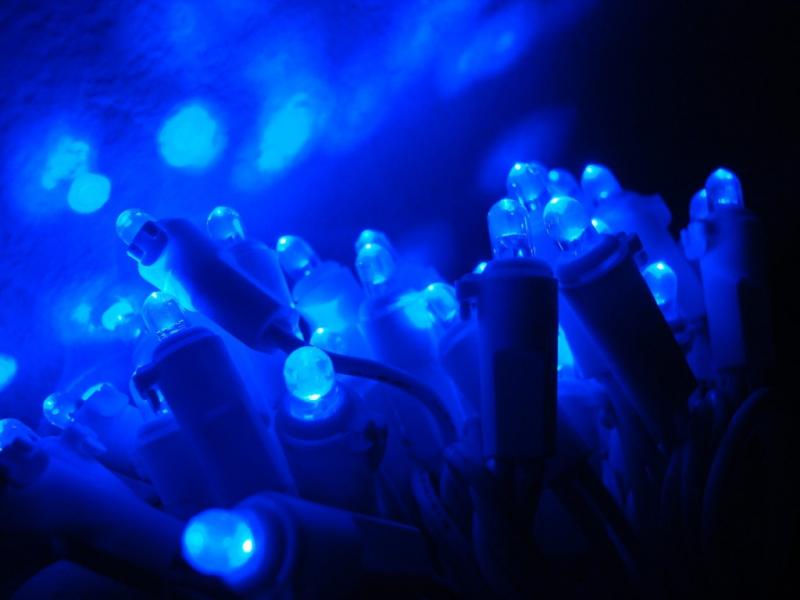
Professor Shuji Nakamura's invention of the blue LED changed holiday lights
Curious Facts About Holiday Lights You Never Knew
By Adam Garcia
The glow of holiday lights brings something special to winter evenings. Whether you string them on a tree, wrap them around railings, or drape them across your roofline, those tiny bulbs carry more history and science than most people realize.
Behind every strand sits a surprising story.
The First Electric Christmas Lights Cost a Fortune
Thomas Edison’s assistant, Edward Johnson, hand-wired the first string of electric Christmas lights in 1882. He placed 80 red, white, and blue bulbs on a rotating tree in his Manhattan home.
The whole setup cost roughly $2,000 in today’s money—per tree. Only the wealthiest families could afford to rent electricians to install these early displays.
Your Lights Create Radio Interference
Holiday lights generate electromagnetic waves that can disrupt radio signals. Amateur radio operators often complain about increased interference during December.
The problem comes from the tiny electrical arcs in older incandescent bulbs and poorly shielded LED drivers. If your neighbor’s radio sounds fuzzy near your house, your decorations might be the culprit.
LED Lights Were Born from a Mistake
Nick Holonyak Jr. invented the first visible LED in 1962 while trying to create a laser at General Electric. He noticed his failed laser produced red light instead.
The technology sat mostly unused for decades until manufacturers realized LEDs could replace traditional Christmas lights. Now they dominate the market.
The Rockefeller Center Tree Uses Miles of Wire
The famous Rockefeller Center Christmas tree gets wrapped with more than five miles of wire each year. The lights contain over 50,000 LEDs.
A team of electricians spends weeks designing the display on computers before touching a single bulb. They map every branch to ensure even coverage.
Outdoor Lights Face Extreme Conditions
The bulbs hanging on your roof endure temperature swings of 100 degrees or more between day and night. They handle rain, snow, wind, and UV radiation for weeks.
Manufacturers test strings in thermal chambers and shake tables to simulate years of wear. Most indoor lights would fail within days outside.
Some Colors Shine Brighter Than Others
Blue LEDs took longer to invent than red or green ones. Scientists struggled for decades to find the right semiconductor materials.
When Shuji Nakamura finally cracked the problem in the 1990s, it earned him a Nobel Prize. Blue LEDs required such precise engineering that they initially cost 10 times more than other colors.
Your Brain Processes Holiday Lights Differently
Studies show that twinkling lights activate the same neural pathways as natural fire. Your ancient brain sees them as a sign of warmth and safety.
This explains why people feel calmer around holiday displays. The effect works even when you consciously know they’re just decorations.
Early Bubble Lights Contained Dangerous Chemicals
Those vintage bubble lights from the 1940s and 1950s used methylene chloride to create the bubbling effect. The chemical boiled at a low temperature, sending colored liquid up the tube.
Manufacturers later switched to safer alternatives after concerns about toxicity. Original versions still show up at antique stores.
Commercial Displays Use Custom Controllers
The elaborate light shows at stores and public spaces run on specialized computer systems. These controllers can manage tens of thousands of individual channels, timing each bulb to the millisecond.
Some displays use DMX512 protocol, the same technology that runs professional stage lighting. You can build your own scaled-down version with a Raspberry Pi.
Incandescent Bulbs Waste Most of Their Energy
Traditional holiday lights convert only 10% of their electricity into visible light. The other 90% becomes heat.
Touch an incandescent strand after an hour and you’ll feel it. LEDs flip this ratio, turning 90% of their power into light. This is why LED strands stay cool and last longer.
The First LED Christmas Lights Cost $80 Per String
When LED holiday lights first hit stores in 1998, a single strand cost about $80. Early adopters bought them anyway, betting on lower electric bills and longer lifespan.
The price dropped below $10 within a decade as production scaled up. Today you can find LED strings cheaper than traditional bulbs.
Some Countries Ban Certain Light Colors
Several European countries restrict the outdoor use of blue and white lights during certain months. The regulations aim to protect migrating birds, which can become disoriented by artificial light.
Germany and the Netherlands enforce the strictest rules. Homeowners stick to warm colors or face fines.
Synchronized Light Shows Require Math
Creating a light display that pulses to music involves complex programming. The software analyzes the song’s waveform, identifying beats, tempo changes, and frequency patterns.
Then it maps these elements to specific lights r groups of lights. Professional displays take hundreds of hours to program for a single song.
The Longest Light Display Stretches for Miles
The Dubai Garden Glow holds the record for the largest LED display, using over 10 million bulbs across 40 acres. Workers spend months assembling the installation, which includes animated figures and entire buildings made from lights.
The display consumes enough electricity to power a small town, even with efficient LEDs.
Holiday Lights Changed Architecture
Folks began wanting extra plugs outside when festive seasons rolled around. Starting in the eighties, construction crews tucked durable sockets by gutters and garden edges.
Earlier setups meant threading wires out window gaps or boring pits through siding. Houses today sometimes come with little hooks hidden beneath roof overhangs.
When darkness turns to light
That string of lights? It’s more than a festive glow. Those little bulbs are busy turning hidden electric flow into bright sparks – mini miracles, really.
Think about it: each flicker runs on the very force fueling distant suns, only shrunk small enough to hang on branches. Not magic, but close.
What feels like holiday cheer is actually science wearing a costume. Imagine capturing wild energy, taming it inside fragile glass, then pricing it under six bucks on an aisle shelf.